

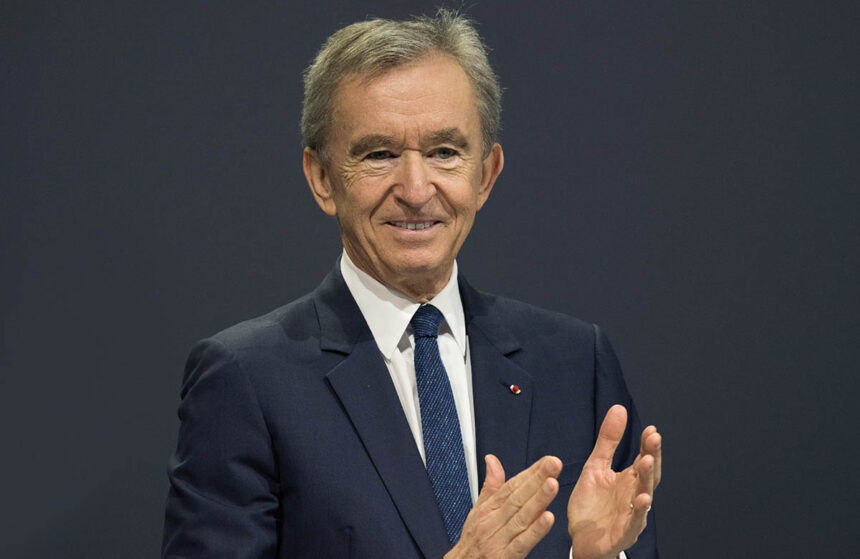
Bernard Jean Étienne Arnault (born 5 March 1949) is a French business magnate, investor, art collector—and for many years one of the richest persons in the world. As Chairman and CEO of LVMH (Louis Vuitton Moët Hennessy), Arnault oversees an empire of luxury brands including Louis Vuitton, Christian Dior, Fendi, Bulgari, Tiffany & Co., Givenchy, TAG Heuer, Sephora, and more.
In 2024-25, his net worth has fluctuated but remains astronomically high. Arnault has repeatedly topped (or been among the top ranks in) Forbes’ and Bloomberg’s lists of global billionaires.
This blog explores his early life, business empire, strategy, global influence (India, USA, UK, China, Canada etc.), controversies, lifestyle, future plans, and also includes keywords & hashtags (English, Hindi, Hinglish) to help content go viral.
1. Early Life, Education & Entry into Business
- Birth & Family Background: Bernard Arnault was born on 5 March 1949 in Roubaix, in northern France. His father owned a construction firm Ferret-Savinel.
- Education: He studied at École Polytechnique, one of France’s elite engineering schools, graduating in 1971. His early training was in civil engineering and mathematics.
- Early Business Moves: After his studies, he worked in the family’s construction business. Over time he shifted towards real estate. In 1984, he acquired Christian Dior (then part of Boussac Saint-Frères, a failing textile concern), and used that to build influence in the luxury industry.
2. Building the LVMH Empire
- Formation & Expansion: LVMH was formed by the merger of Moët Hennessy and Louis Vuitton. Arnault gradually built a controlling stake and became Chairman & CEO.
- Brand Acquisitions: Under his leadership, LVMH acquired many iconic luxury brands: Dior, Bulgari, Tiffany & Co., Fendi, Givenchy, TAG Heuer, etc.
- Global Retail Footprint: Over 5,000+ stores globally in fashion, perfume, cosmetics, watches, leather goods. He recognized early the importance of Asia (especially China). Arnault opened Louis Vuitton stores in Beijing as early as the 1990s.
3. Net Worth & Ranking Among Billionaires (India, USA, China, UK etc.)
- According to Forbes and other reports, in 2024 Bernard Arnault’s net worth was estimated at USD ~233 billion, making him often the richest or among the top richest persons globally.
- Bloomberg Billionaires Index gives a somewhat lower but still enormous figure (~USD 150-200+ billion depending on date, market swings).
- Compared to billionaires from other countries:
- In USA, people like Elon Musk, Jeff Bezos often contest for the top position. Arnault has overtaken them at times.
- In India, Arnault is vastly richer than any Indian billionaire (like Mukesh Ambani), in absolute USD terms.
- In China, the luxury market is huge; Arnault has strategically expanded into China, tapping demand for high-end goods.
- In UK & Canada, LVMH brands are very popular. Retail, boutiques, high fashion consumption contribute to brand visibility and Arnault’s influence.
4. Global Influence & Impact in Key Countries
India
- Luxury brands under LVMH are increasingly in demand among Indian consumers—especially in metros: Mumbai, Delhi, Bangalore, etc.
- Indian elite, wealthy millennials and Gen Z are buying Louis Vuitton, Dior, Tiffany, watches etc. LVMH has been investing in retail presence in India.
- Some tax, import duty, and regulatory challenges in India apply to luxury goods which affect pricing and margins.
China
- China is among LVMH’s biggest growth engines. Chinese consumers have strong demand for luxury handbags, watches, cosmetics. Arnault foresaw this early (store openings etc.).
- However, geopolitical tensions, import tariffs, changing regulatory environment, and shifts in consumer behavior (sustainability etc.) are challenges.
USA & UK & Europe
- USA: Luxury consumption is strong; LVMH also owns American brands (like Tiffany & Co.). The US market contributes significantly to revenues.
- UK: High fashion is big in London; flagship stores in London, boutiques etc. Fluctuations in exchange rate, Brexit impacts import duties, luxury taxes.
- Europe overall remains the base: France is LVMH’s home, many design, manufacturing, heritage roots are in France/Italy etc.
Canada, Middle East, Other Markets
- Canada has rising demand for luxury goods; LVMH and associated brands operate boutiques in Toronto, Vancouver, etc.
- Middle East (UAE, Saudi Arabia) is a big market for luxury – high spending power, tourism, duty-free retail. Arnault’s brands are prominent.
5. Lifestyle, Art & Personal Aspects
- Arnault is known not just for business, but also art collecting. The Fondation Louis Vuitton in Paris (museum, cultural center) is a major cultural institution.
- He has large residences (e.g. his mansion etc.) and posh assets; luxury real estate, yachts are part of his lifestyle.
- Family involvement: Many of his five children (Delphine, Antoine, Frédéric, Alexandre etc.) work in various roles across the LVMH group.
6. Challenges & Controversies
- Volatility in luxury demand: Economic downturns, inflation, shifts in consumer preferences (towards sustainability, ethical fashion) pose risk.
- Regulatory / tax scrutiny: In Europe, high taxes, luxury goods regulations, import duties, environmental regulation are important.
- Reputation issues: Questions about labor practices in production, environmental footprint of fashion and luxury goods (materials, shipping, packaging).
- Succession planning: At his age, Arnault has worked to ensure that his children are embedded in the company; arranging ownership stakes, control via holding companies.
7. Future Trends & What to Watch
- Growth in Asia (China, Southeast Asia, India) remains key. Digital luxury, e-commerce, online boutique experiences.
- Sustainability & ethical luxury: brands under LVMH will need to adapt further (sustainable materials, carbon reduction, transparency).
- Luxury resale, vintage market growing. Counterfeits & grey market regulation will matter.
- Innovation: Collaborations, luxury tech, augmented reality showrooms, NFTs etc.
- Continuing role in art and culture: Fondation Louis Vuitton expansions, cultural philanthropy.
English Keywords
- Bernard Arnault
- Bernard Arnault net worth
- LVMH CEO
- Luxury brands Louis Vuitton, Dior, Tiffany & Co., Givenchy
- Bernard Arnault India market
- Arnault vs other billionaires
- Bernard Arnault biography
- Bernard Arnault lifestyle
- Bernard Arnault art collector
- Luxury goods market in USA, UK, China
Hindi & Hinglish Keywords
- Bernard Arnault ki kahani
- Bernard Arnault ka net worth
- LVMH ka malik
- Louis Vuitton aur Dior India
- Bernard Arnault India mein kitna famous
- Arnault lifestyle – bahut paisa
- Luxurious brands ka king
- Arnault ka fashion empire
- Bernard Arnault ke bachche LVMH
- Bernard Arnault art collection
Hashtags
English Hashtags:
#BernardArnault
#LVMH
#LuxuryEmpire
#NetWorth
#FashionIcons
#LuxuryBrands
#Dior #LouisVuitton #Tiffany
#BillionaireLife
#GlobalInfluence
Hindi / Hinglish Hashtags:
#BernardArnaultKiKahani
#LuxuryKaKing
#ArnaultKaNetWorth
#LVMHIndia
#FashionEmpire
#StyleAurStatus
#LuxuryBrandsIndia
#BernardArnaultLifestyle
#BillionaireIndiaDreams
FAQ (Frequently Asked Questions)
Q1. Who is Bernard Arnault?
A: Bernard Arnault is a French billionaire businessman, chairman & CEO of LVMH, the leading global conglomerate of luxury brands.
Q2. What is his current net worth?
A: As of 2024/2025, estimates vary by source, but it is around USD ~200-240 billion, making him among the richest individuals globally.
Q3. How did Bernard Arnault become rich?
A: He built his wealth by acquiring and turning around luxury brands. Key moves: buying Christian Dior in 1984, consolidating shares in LVMH, acquiring Tiffany & Co., and growing worldwide retail.
Q4. What is LVMH and how big is the brand portfolio?
A: LVMH is a luxury goods conglomerate owning ~70-75 brands in fashion, cosmetics, wine & spirits, jewelry, watches etc. It has thousands of stores globally.
Q5. What is Bernard Arnault’s influence in India?
A: Indian consumers of luxury goods are increasing. LVMH brands are present in India; demand is rising. Although no direct “India headquartered” operations like Amazon etc., Arnault’s brands serve Indian luxury market.
Q6. Does Arnault have children involved in business?
A: Yes. Many of his children (Alexandre, Antoine, Delphine, Frédéric etc.) hold positions in LVMH brands or the group’s governance. Succession planning is an important part of Arnault’s structure.
Q7. What controversies or challenges has he faced?
A: Market fluctuations, regulatory and tax scrutiny in Europe, environmental concerns, and shifting consumer behaviour (towards sustainable fashion) are challenges. Also, luxury goods tend to be sensitive to economic downturns.
Conclusion
Bernard Arnault stands as a powerful symbol of how vision + risk taking + patience + brand heritage can build one of the world’s most formidable luxury empires. His story spans from northern France to the streets of Beijing, New York, London, and Mumbai—affecting global fashion, culture, wealth distributions, and consumer aspirations everywhere.
As the luxury market evolves with new values (sustainability, digital experiences, inclusive branding), Arnault’s ability to adapt will be watched closely. Whether he continues to hold the top seat among billionaires, how LVMH fares in India, China, and other rising markets, and how younger generations under him perform—all make his future story as compelling as his past.